



L’amande est un sujet largement étudié en nutrition en raison de la densité exceptionnelle de ce fruit à coque. Consommée depuis des siècles dans de nombreuses cultures, l’amande est aujourd’hui reconnue pour son profil nutritionnel complet en protéines végétales, en fibres alimentaires, en vitamine E, ainsi qu’en minéraux essentiels comme le magnésium et le calcium.
Dans un contexte où l’alimentation joue un rôle central dans de nombreux objectifs, les amandes suscitent un intérêt croissant. Cet article propose une analyse structurée, afin de comprendre les véritables bienfaits des amandes, leur composition nutritionnelle, ainsi que leurs effets potentiels sur l’organisme.
Sommaire
Qu’est-ce que l’amande et pourquoi est-elle si étudiée en nutrition ?
Un fruit à coque à forte densité nutritionnelle
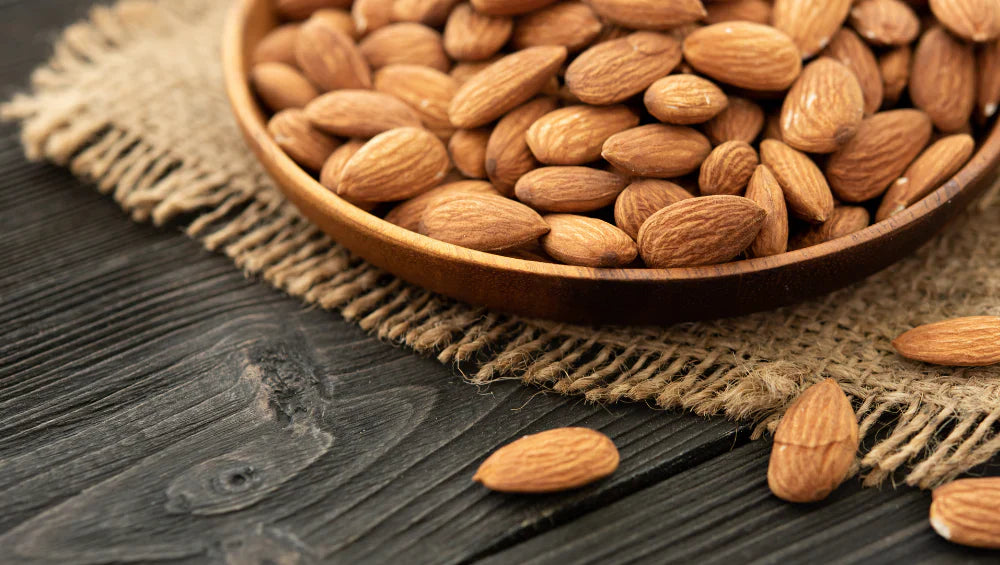
L’amande (Prunus dulcis) est le noyau comestible du fruit de l’amandier. Elle appartient à la famille des fruits à coque, au même titre que les noix ou les noisettes.
Ce qui distingue particulièrement l’amande est sa densité nutritionnelle élevée : une petite portion concentre une grande quantité de nutriments essentiels, ce qui en fait un aliment souvent étudié en nutrition humaine et sportive.
Selon la revue scientifique (2), l’amande est un aliment complexe contenant des lipides de haute qualité, des fibres et une large gamme de composés bioactifs ayant un intérêt potentiel pour l’organisme.
Une composition naturellement équilibrée
Sur le plan nutritionnel, l’amande se distingue par :
- des lipides majoritairement insaturés (bons gras)
- environ 20 à 25 g de protéines pour 100 g
- une teneur intéressante en fibres
- des micronutriments essentiels (magnésium, calcium, potassium)
- une forte concentration en vitamine E
Cette combinaison explique pourquoi les amandes sont souvent intégrées dans les régimes sportifs et une alimentation équilibrée.
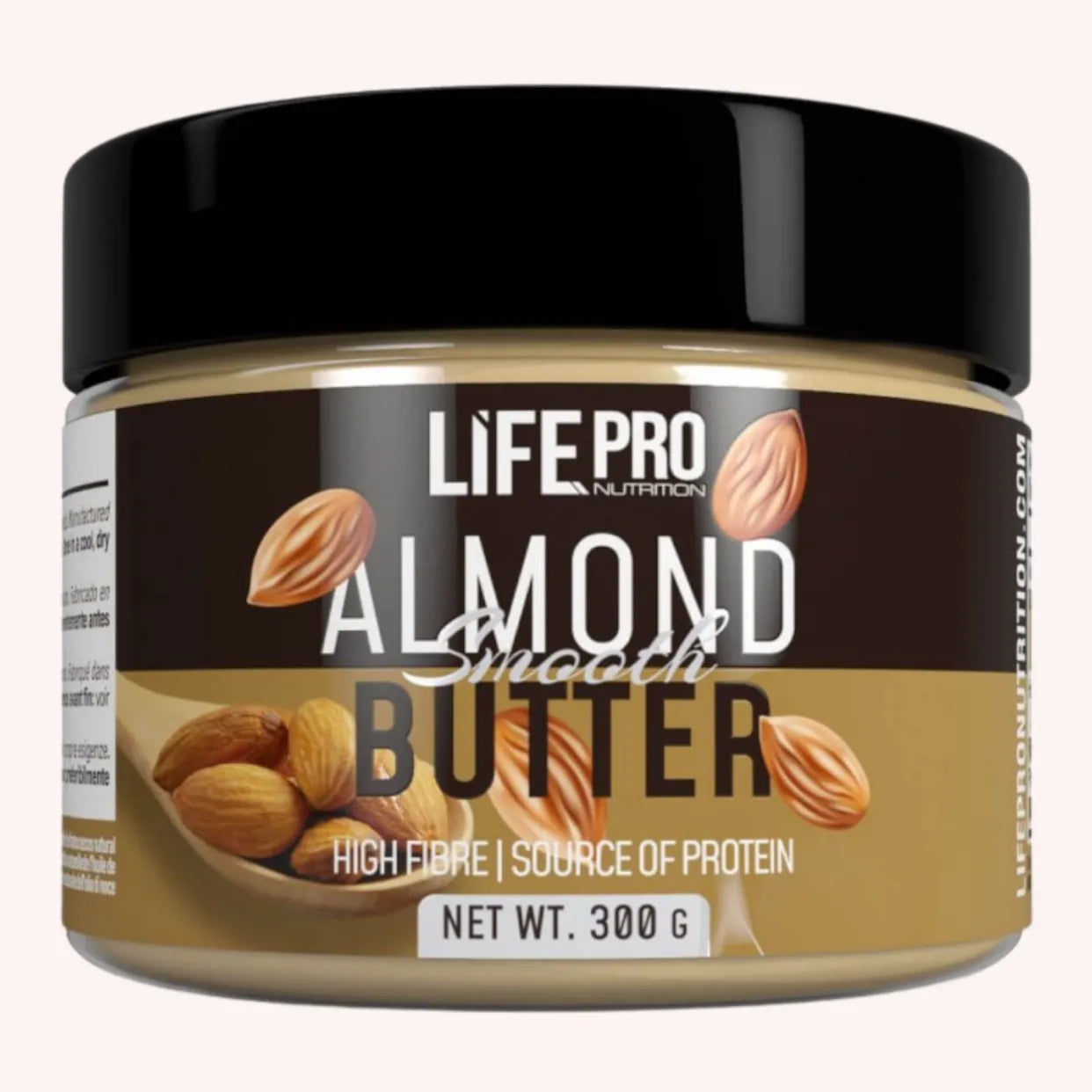
Almond Butter - LifePro
Sale price10,90€
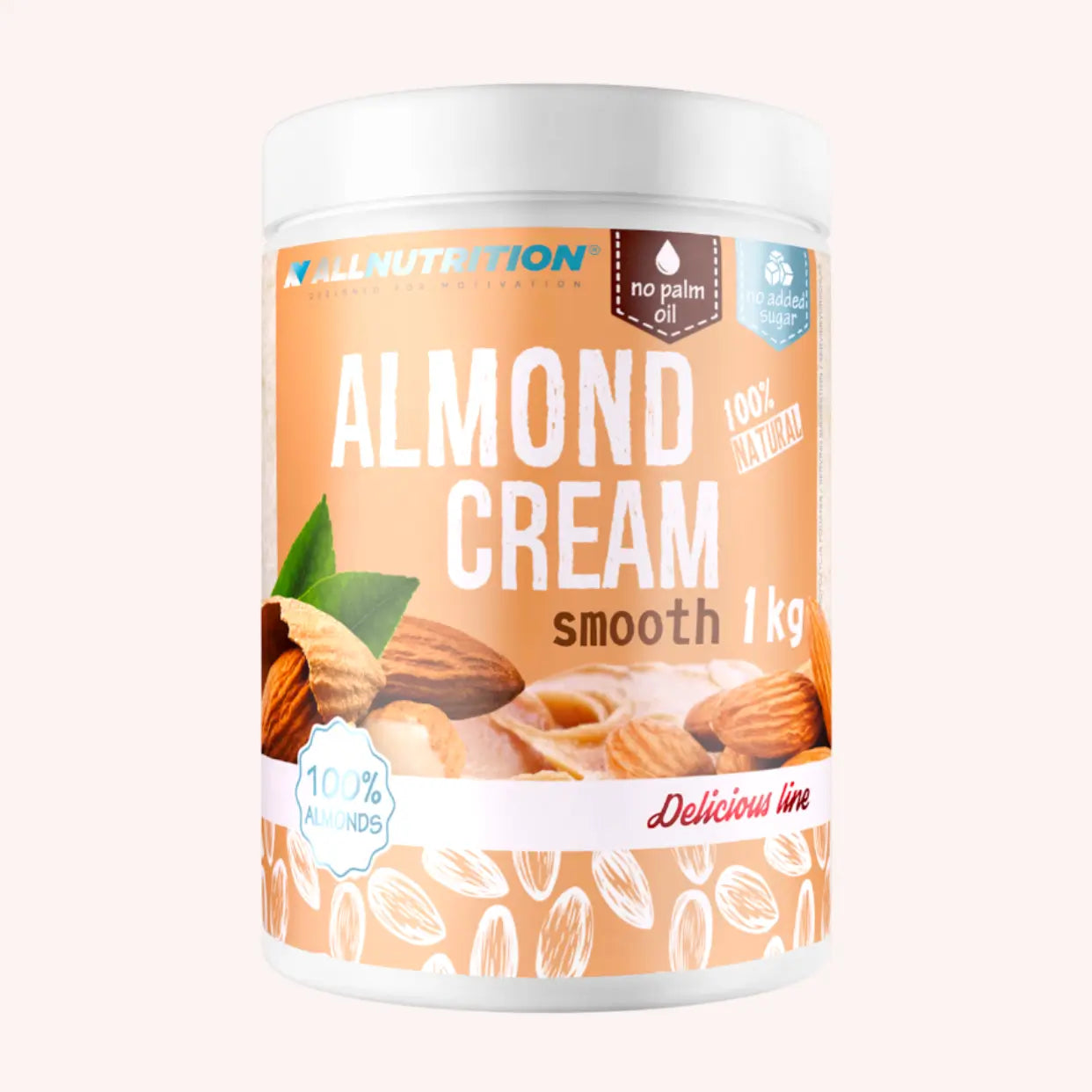
Beurre amande - All Nutrition
Sale priceFrom 18,90€
Amande bienfait : Quels effets liés à sa composition ?
L’amande est un aliment dont l’intérêt nutritionnel est directement lié à sa structure biochimique dense, combinant lipides insaturés, protéines végétales, fibres alimentaires et une grande variété de micronutriments. Cette composition en fait un modèle fréquemment étudié en nutrition humaine pour comprendre les interactions entre nutriments et fonctionnement métabolique.
Une structure lipidique dominée par les acides gras insaturés
La composition lipidique des amandes est majoritairement constituée d’acides gras mono-insaturés, avec une faible proportion de lipides saturés.
Ces acides gras s’intègrent dans les processus de transport lipidique et sont étudiés pour leur comportement dans les lipoprotéines circulantes.
Organisation protéique et richesse en micronutriments
Les amandes contiennent une proportion significative de protéines végétales, accompagnées de divers micronutriments tels que le magnésium, le calcium, le phosphore et le potassium.
Les protéines issues de l’amande ont été étudiées pour :
- leur profil en acides aminés
- leurs propriétés fonctionnelles dans les matrices alimentaires
- leur comportement lors de la digestion enzymatique
- leur contribution au développement et au maintien de la masse musculaire
Beurre d’amande : Alternative ou équivalent nutritionnel ?
Une forme concentrée de l’amande
Le beurre d’amande est obtenu par broyage des amandes jusqu’à obtention d’une pâte homogène.
Il conserve globalement les mêmes nutriments, mais sous une forme plus concentrée et souvent plus calorique par portion.
Intérêt en nutrition sportive
Le beurre d’amande est souvent utilisé :
- dans les smoothies
- sur des tartines
- en collation pré ou post entraînement


Magnésium Bisglycinate - Essential Supp
Sale price18,90€

Calcium - Nutrimea
Sale price19,90€
Comment intégrer les amandes dans une alimentation équilibrée et sportive ?
Quantité recommandée
Dans une alimentation équilibrée, la consommation d’amandes est généralement située autour de 20 à 30 grammes par jour, soit une petite poignée. Cette portion permet d’intégrer leur densité nutritionnelle sans déséquilibrer l’apport énergétique global de la journée, ce qui est particulièrement important dans un contexte de suivi alimentaire ou de pratique sportive régulière.
Moments de consommation
Les amandes peuvent être intégrées à différents moments de la journée, en fonction des besoins et du rythme d’activité :
- au petit-déjeuner, pour enrichir un repas en lipides et en protéines végétales
- en collation, afin de structurer les apports entre deux repas
- autour d’une séance de sport, avant ou après l’entraînement selon l’objectif nutritionnel
Exemples d’utilisation au quotidien
Les amandes s’intègrent facilement dans différents types de repas, sans préparation complexe :
- ajout dans un yaourt nature ou un skyr pour enrichir la texture et la densité nutritionnelle
- incorporation dans un porridge pour une collation complète et structurée
- mix dans un smoothie protéiné pour augmenter l’apport en lipides et en protéines végétales
- utilisation du beurre d’amande sur du pain complet pour un apport énergétique progressif
Amande bienfait, tout savoir : En résumé
L’amande se distingue avant tout par une composition nutritionnelle dense et structurée, associant lipides insaturés, protéines végétales, fibres et micronutriments comme le magnésium, le calcium et la vitamine E. L’organisation de ces différents éléments dans une même matrice alimentaire fait l’objet de nombreuses analyses en nutrition.
De plus, l’amande s’intègre facilement à de nombreux objectifs sportifs (sèche, prise de masse musculaire ou maintien du poids), qu’elle soit consommée en collation, autour de l’entraînement ou le matin.