

La sauce est souvent considérée comme un simple accompagnement, mais elle peut jouer un rôle déterminant dans la réussite d’une alimentation sportive, qu’il s’agisse de prise de masse ou de sèche. Bien choisie, elle apporte saveur et variété sans compromettre les objectifs nutritionnels.
Cet article vous guide pour comprendre les enjeux liés à l’intégration des sauces dans un régime sportif, vous propose des recettes maison adaptées et vous donne des conseils pratiques pour allier plaisir et objectifs alimentaires.
Sommaire
Pourquoi les sauces peuvent poser problème dans une alimentation sportive ?
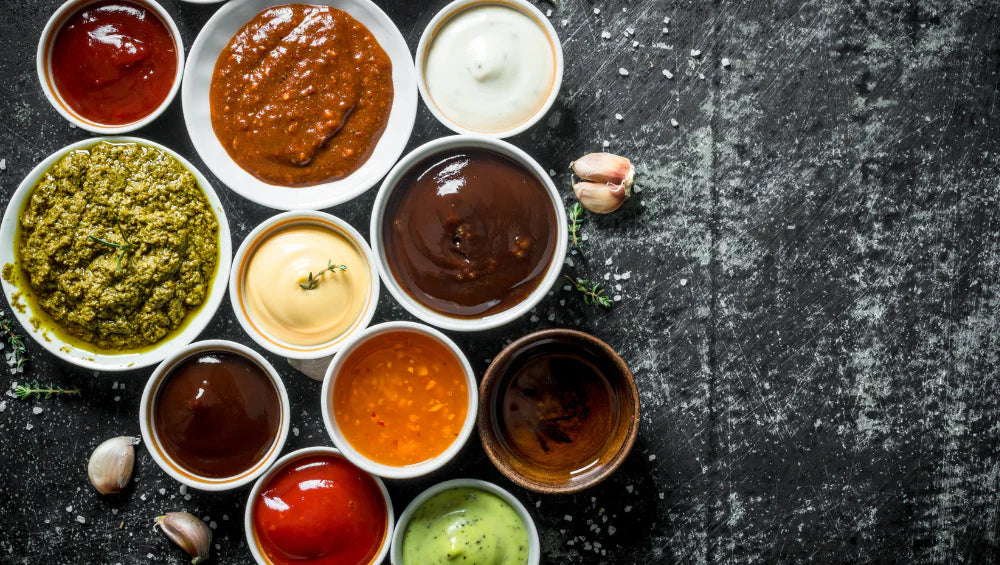
Dans le cadre d'une alimentation sportive, les sauces sont souvent perçues comme de simples accompagnements. Pourtant, elles peuvent rapidement déséquilibrer un repas, en particulier lorsqu'elles sont issues de l’industrie agroalimentaire. La majorité des sauces industrielles contiennent une quantité importante de calories cachées, provenant notamment de graisses saturées, de sucre ajouté, ou encore d’additifs qui n’apportent aucune valeur nutritionnelle. Leur consommation régulière peut ainsi compromettre des objectifs de sèche ou freiner une prise de masse propre.
Cependant, éliminer totalement les sauces de son alimentation n’est ni nécessaire, ni souhaitable. Au contraire, une sauce bien choisie ou préparée maison avec des ingrédients maîtrisés, peut transformer un plat banal en un repas savoureux, satisfaisant et aligné avec ses objectifs. Le goût joue un rôle crucial dans l’adhésion à un plan alimentaire sur le long terme : un repas fade entraîne souvent frustration, grignotage ou abandon du programme nutritionnel.
Heureusement, il existe aujourd’hui de nombreuses alternatives saines, comme des sauces allégées ou encore des sauces zéro (pauvres en calories), adaptées aux besoins des sportifs et des personnes faisant attention à leur alimentation. Ces versions modernes permettent de concilier plaisir et performance, à condition de bien lire les étiquettes.

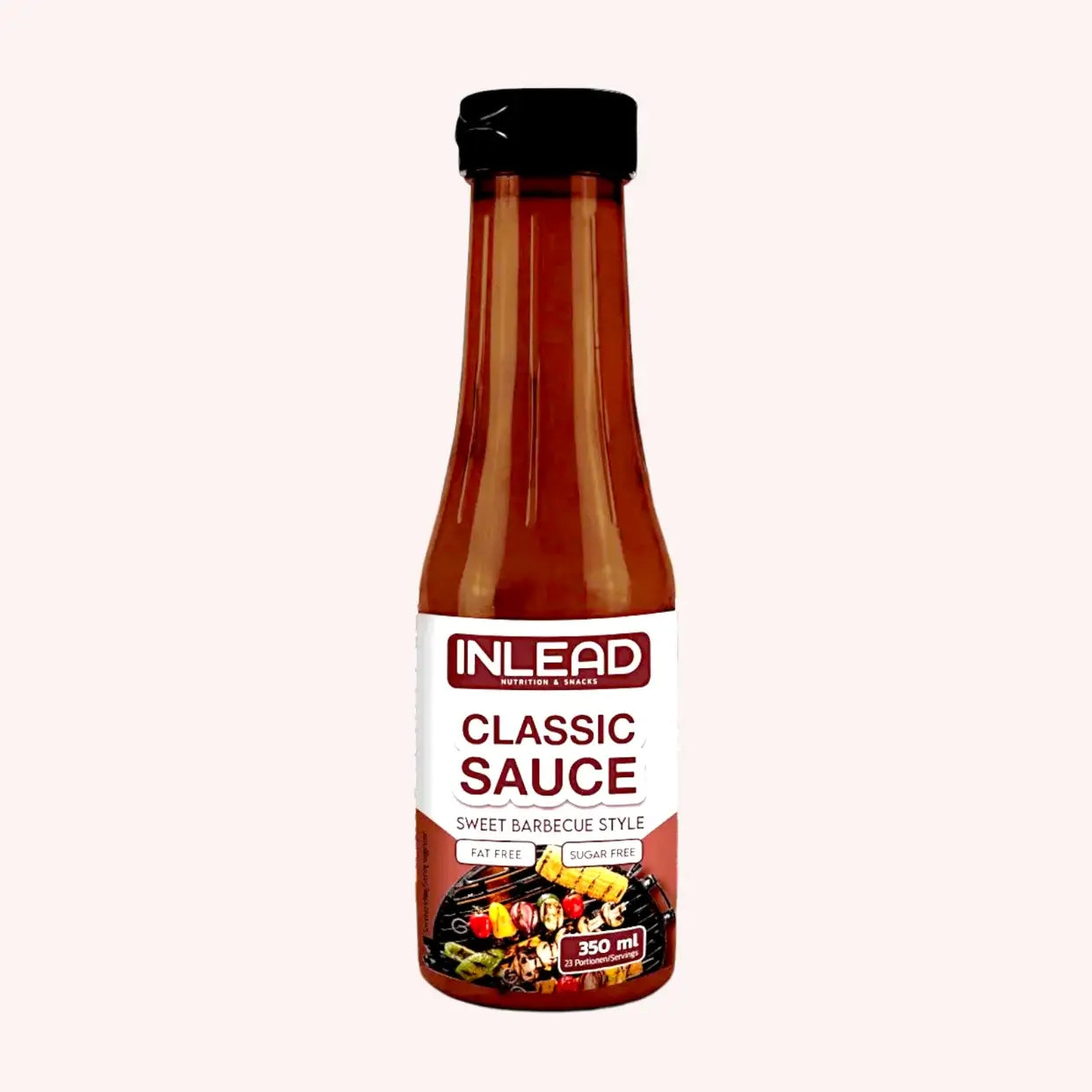
Zero Sauce - Inlead
Sale price5,90€
Zero Sauce - Inlead
5,90€
- Zero fat
- Almost calorie-free
- Zero added sugar
Idées de plats avec sauce : en sèche ou en prise de masse
Sauces sucrées : pour le petit-déjeuner et les collations
En sèche : privilégier la légèreté
- Sauce chocolat : bowl de skyr avec flocons d’avoine et fruits rouges
- Sauce noisette : pancakes protéinés à la farine d’avoine
- Sauce caramel : flan protéiné maison ou tofu soyeux sucré
- Chocolat blanc : yaourt grec 0 % avec whey et topping chocolat blanc
En prise de masse : favoriser les bonnes calories
- Sauce chocolat : pain complet tartiné de beurre de cacahuète avec sauce chocolat
- Sauce caramel : bowl protéiné avec granola, banane et graines de chia
- Sauce noisette : gaufres maison à base d’œufs, farine de patate douce et purée d’oléagineux
- Chocolat blanc et fromage blanc : cheesecake express riche en protéines et lipides
Sauces salées : pour les repas principaux
En sèche : garder du goût sans calories superflues
- Sauce César : salade de poulet grillé avec crudités et œuf dur
- Sauce barbecue s : steak haché 5 % accompagné de légumes vapeur et riz complet
- Ketchup : omelette blanche avec pommes de terre vapeur
- Moutarde au miel : blanc de dinde, patate douce rôtie et brocolis
En prise de masse : soutenir les apports caloriques sans excès
- Sauce César : wrap de poulet, avocat et riz
- Sauce barbecue : burger maison (pain complet et steak 5 %) avec frites au four
- Ketchup : riz complet avec œufs brouillés et haricots rouges
- Moutarde miel : poulet rôti, semoule et courgettes grillées
Il existe donc une grande variété de sauces adaptées à différents objectifs nutritionnels, que vous pouvez facilement intégrer à vos recettes pour enrichir vos repas tout en respectant votre plan alimentaire. Le plus important est de choisir une sauce de qualité.
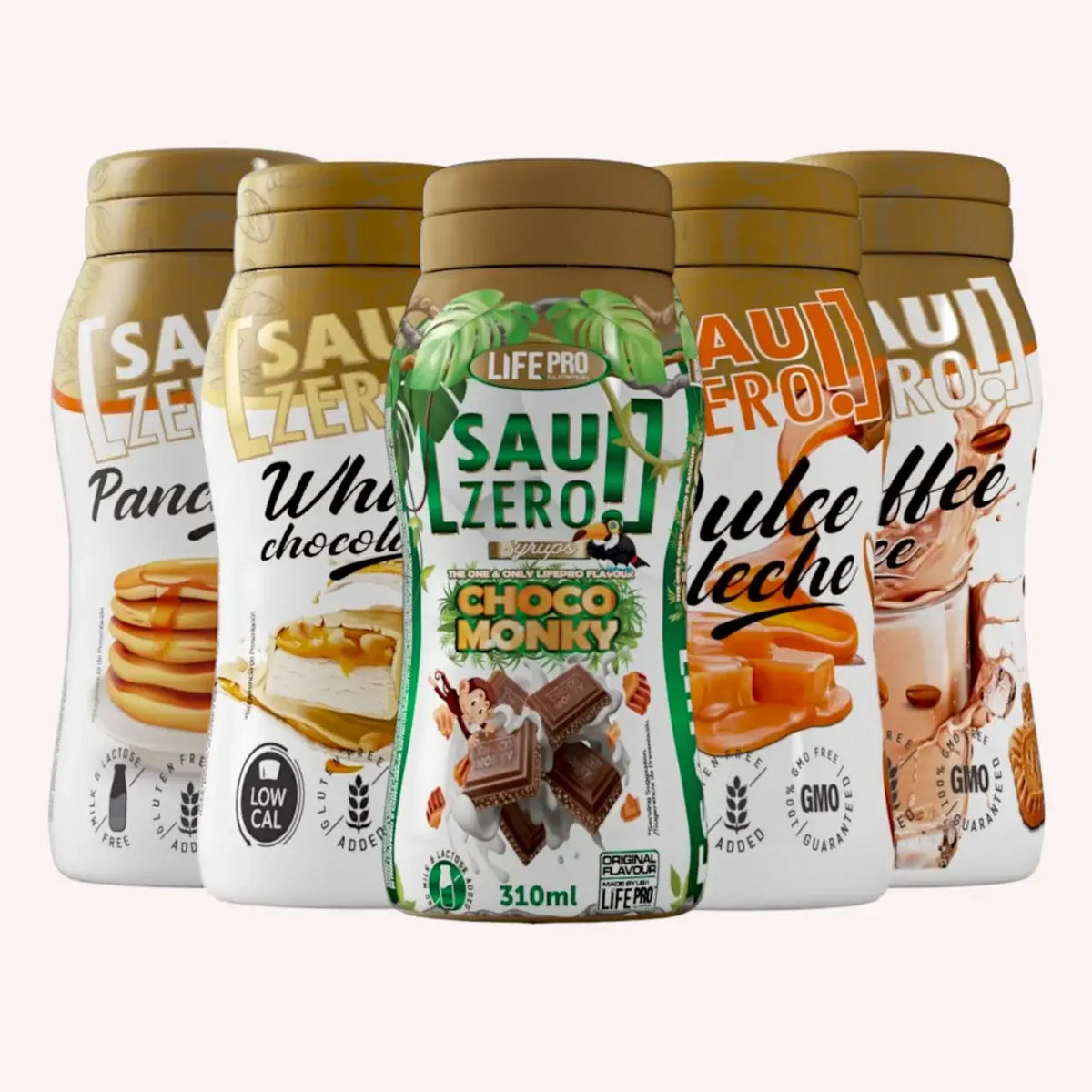

Sweet Sauzero - LifePro
Sale price5,90€
Recettes maison saines et protéinées
Pour allier plaisir et nutrition, découvrez ces sauces faciles à préparer, adaptées à vos objectifs sportifs, qu’il s’agisse de sèche ou de prise de masse.
Sauce gribiche
Ingrédients :
- 2 blancs d’œufs ( ou 60 ml de blanc d’oeuf liquide)
- 1 cuillère à café de moutarde
- 50 ml d’eau froide (ajuster selon la consistance)
- 100 g de yaourt 0 %
- 30 g de cornichons mixés
- Sel, poivre, estragon au goût
Méthode : Cuire les blancs d’œufs. Mixer tous les ingrédients jusqu’à obtenir une texture lisse et onctueuse. Ajuster la consistance avec un peu d’eau si la sauce est trop épaisse.
Variante prise de masse : ajouter 1 cuillère à soupe d’huile d’olive pour augmenter les bonnes graisses et les calories.
Idée d’utilisation : parfaite pour accompagner une tartine ou une salade composée.
Sauce tomate maison
Ingrédients :
- 400 g de tomates concassées (fraîches ou en conserve)
- 1 gousse d’ail frais écrasée
- 1 cuillère à soupe d’herbes aromatiques (basilic, origan)
- 1 cuillère à café d’huile d’olive
Méthode : Faire cuire les tomates avec l’ail et les herbes pendant environ 10 minutes. Mixer pour obtenir une texture veloutée.
Variante prise de masse : ajouter un filet (1 cuillère à café) d’huile d’olive en fin de cuisson pour plus de richesse calorique, sans excès.
Idée d’utilisation : idéale pour accompagner des pâtes ou des légumes grillés.
Sauce au poivre
Ingrédients :
- 200 ml de lait végétal (amande, soja) ou lait écrémé
- 1 cuillère à café de poivre concassé
- 1 cuillère à café de moutarde (facultative)
Méthode : Chauffer doucement le lait avec le poivre sans le faire bouillir. Épaissir la sauce avec 1/2 cuillère à café d’agar-agar pour obtenir une consistance crémeuse.
Variante prise de masse : remplacer la moitié du lait (100 ml) par de la crème légère pour plus d’onctuosité et de calories.
Idée d’utilisation : accompagne parfaitement les pommes de terre ou une viande blanche.
Sauce César
Ingrédients :
- 150 g de skyr ou tofu soyeux
- 1 cuillère à café de moutarde
- Le jus d’un demi-citron
- 1 petite gousse d’ail
- 1 cuillère à soupe de câpres
Méthode : Mixer tous les ingrédients jusqu’à obtenir une sauce homogène et onctueuse. Variante sèche : sans ajout d’huile pour limiter les calories.
Version plus riche : ajouter un jaune d’œuf ou un filet (1 cuillère à café) d’huile d’olive pour plus de saveurs et de calories.
Idée d’utilisation : parfaite pour relever une salade verte ou un bowl protéiné.
Sauce béchamel
Ingrédients :
- 250 ml de lait écrémé
- 2 cuillères à soupe de farine complète ou fécule Une pincée de muscade
- Sel et poivre au goût
Méthode : Chauffer le lait. Dans un bol, délayer la farine ou la fécule dans un peu de lait froid. Ajouter au lait chaud et remuer jusqu’à épaississement. Ajoutez du sel, du poivre et de la muscade.
Variante prise de masse : utiliser du lait entier et ajouter 10 g de beurre pour une version plus calorique.
Idée d’utilisation : idéale pour les gratins ou plats à base de légumes.
Sauce au beurre de cacahuète
Ingrédients :
- 3 cuillères à soupe de beurre de cacahuète naturel (sans sucre ni huile ajoutée)
- 50 ml d’eau ou 60 g de yaourt nature pour ajuster la texture
- Épices : 1/2 cuillère à café de paprika, 1/4 cuillère à café d’ail en poudre, une pincée de piment doux
Méthode : Mélanger le beurre de cacahuète avec l’eau ou le yaourt jusqu’à obtenir une consistance lisse et crémeuse. Ajuster les épices selon le goût.
Variante sèche : réduire la quantité pour limiter les calories.
Idée d’utilisation : délicieux avec du riz ou des légumes vapeur.
Ces recettes maison vous permettent de maîtriser la qualité des ingrédients, d’ajuster les calories selon vos besoins (sèche ou prise de masse), tout en apportant saveur et diversité à vos repas. Privilégier ces sauces maison vous assure une meilleure maîtrise nutritionnelle.
Conseils de conservation
- Pour faciliter le meal-prep, préparez vos sauces en grande quantité et conservez-les dans des bocaux hermétiques au réfrigérateur, où elles se conservent généralement entre 3 et 5 jours.
- Pour une conservation plus longue, pensez à congeler vos sauces en portions individuelles, ce qui permet de les décongeler facilement au moment voulu.
Sauce : en résumé
Les sauces, souvent perçues comme des éléments secondaires, jouent en réalité un rôle clé dans l’équilibre et le plaisir alimentaire, surtout dans une alimentation sportive. Qu’il s’agisse de prise de masse ou de sèche, choisir des sauces adaptées ou faites maison permet de maîtriser les apports caloriques, les ingrédients et la qualité nutritionnelle.
En privilégiant des recettes simples, riches en saveurs et modulables selon vos objectifs, il est possible d’allier goût et performance sans compromettre la santé. Enfin, bien lire les étiquettes des sauces industrielles et privilégier les versions légères vous aidera à éviter les excès de sucres, de matières grasses saturées et d’additifs inutiles.