



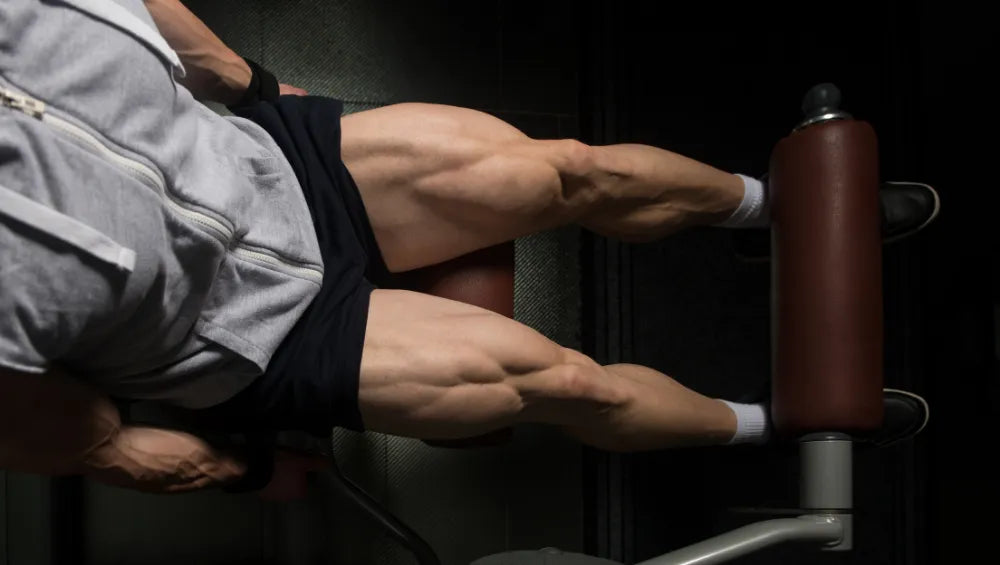
Strength training is a vast and complex world, and when it comes to structuring your workouts, a choice often arises: Split or PPL ? These two methods are among the most popular in the world of resistance training, but how do you know which one is best suited to your goals and level?
In this article, we’ll dive into the details of both programs, compare them in terms of structure, effectiveness, and results, and help you decide which one is best for you. To do this, we’ll explore the pros and cons of each, while also addressing the importance of tailoring your workout to your lifestyle , fitness level , and goals .
Whether you are a beginner , intermediate or advanced , this article will provide you with a solid foundation to make an informed decision.
What is the Split program?
The Split program refers to a training method where each session focuses on one or more specific muscle groups . For example, one day may be dedicated to the pectorals and triceps , while another day focuses on the back and biceps .
This type of split allows you to focus on the intensity and volume of work for each muscle group , with the goal of working them in depth. There are several types of splits: Upper-lower , push-pull , or even more detailed splits where each muscle group is targeted several times a week.
Advantages of Split
- High training volume: You can perform a higher volume of work on each muscle, which can be beneficial for hypertrophy, as shown in the research of Schoenfeld et al. (1) in their study on training frequency and muscle hypertrophy.
- Increased Recovery: Since you work one muscle group per session, there is adequate recovery time between sessions for each muscle group.
- Deepening Specialization: If your goal is to strengthen specific muscles (e.g., chest or legs ), a split will allow you to focus more attention and intensity on them.


Disadvantages of Split
- Less frequency per muscle group: Typically, with a split program, a muscle is only trained once or twice per week, which may limit the frequency needed for optimal gains, as recommended in the study by Rafael S Zaroniet al. (3), which demonstrates that higher training frequency promotes muscle gains.
- Training time: A split program often requires more sessions per week, which can be restrictive for people with busy schedules.
What is the PPL program?
The Push-Pull-Legs (PPL) program is a more balanced method, where training is spread over three types of sessions:
- Push: Pushing exercises, targeting the pectorals , shoulders , and triceps .
- Pull: Pulling exercises, involving the back , biceps , and forearms .
- Legs: Leg exercises (quadriceps, hamstrings, calves).
This method is particularly popular for its flexibility and ability to increase training frequency for each muscle group while avoiding overexertion.
Advantages of PPL
- High training frequency: The program allows each muscle group to be worked more frequently (two to three times per week). This can be especially effective for intermediate and advanced exercisers looking to maximize muscle gains, as indicated by the research by Ribeiro et al. (2) on split training frequency.
- Flexibility: A PPL program can be customized to fit your schedule, with 3-6 days of training per week. This makes it ideal for those with busy lives.
- Balance between strength and hypertrophy : PPL offers a good balance between pushing and pulling exercises, allowing for harmonious muscle development.
Disadvantages of PPL
- Repetition of sessions: Push and pull sessions can sometimes lack variety, which can make the workout repetitive for some exercisers.
- Exhaustion for beginners: If you are a beginner, you may find this program too intensive, especially during the first few weeks of adaptation.
Split vs PPL: Which program to choose according to your level?
Beginners
For beginners, a PPL is often more suitable. Why? Because this program allows you to work each muscle group more frequently and with less intensity in each session. This allows for better adaptation to the movements, while still providing enough rest time between sessions to recover. In addition, the PPL can be more easily modulated to accommodate a more flexible schedule.
Intermediaries
If you already have some experience with resistance training, you can opt for a split . This allows you to work a muscle group in a more targeted manner and increase the intensity of the training volume. A split program can also be combined with a PPL program to optimize the frequency and intensity of the training.
Advances
For advanced lifters, a split combined with advanced techniques (like periodization and supersets ) can maximize muscle gains. On the other hand, if you're a more versatile athlete, PPL can offer better frequency and variety while still effectively stimulating each muscle group.


Training plan: Example for each level
Beginners: PPL Program (3 days per week)
| Day | Type of training | Exercises | Series / Repetitions |
| Monday | Push | Bench press, Lateral raises, Dips | 3 Sets of 10-12 reps |
| Wednesday | Sweater | Pull-ups, Dumbbell Rows, Biceps Curls | 3 Sets of 10-12 reps |
| Friday | Legacy | Squat, Leg Press, Lunges | 3 Sets of 12-15 reps |
Intermediates: Split Program (4 days per week)
| Day | Type of training | Exercises | Series / Repetitions |
| Monday | Upper body (Push) | Incline bench press, Lateral raises, Triceps | 4 Sets of 8-10 reps |
| Tuesday | Lower body (Legs) | Squat, Deadlift, Lunges | 4 Sets of 8-12 reps |
| THURSDAY | Upper body (Sweater) | Bar Rowing, Horizontal Pulldown, Bicep Curl | 4 Sets of 8-10 reps |
| Friday | Legs | Leg press, Leg curls, Standing calf raises | 4 Sets of 10-12 reps |
Advanced: Split Program (5 days per week)
| Day | Type of training | Exercises | Series / Repetitions |
| Monday | Pectorals & Triceps | Bench press, Incline fly, Dips | 5 Sets of 6-8 reps |
| Tuesday | Back & Biceps | Pull-ups, Barbell Row, Incline Curl | 5 Sets of 6-8 reps |
| Wednesday | Legs | Squat, Leg press, Lunges | 5 Sets of 8-10 reps |
| THURSDAY | Shoulders & Triceps | Military press, Lateral raises, Extensions | 5 Sets of 8-10 reps |
| Friday | Legs | Deadlift, Leg curls, Standing calf raises | 5 Sets of 8-10 reps |
Optimizing your workouts: The importance of pre- and intra-workouts
Pre-workout : Boost energy before training
Pre-workouts are supplements used before a workout to increase energy, improve focus, and delay muscle fatigue. They often contain ingredients like caffeine, creatine, or beta-alanine, which can increase performance during intense sessions. If you're following a split or PPL program, a pre-workout can be a great ally to maximize the intensity of your workouts, especially on the toughest days.
Intra-workout : Maintain endurance during training
Intra-workouts, on the other hand, are consumed during training to support endurance, hydration and muscle recovery. The branched-chain amino acids ( BCAAs ) and electrolytes present in these supplements can be useful, especially for those following a PPL program with a high training frequency. They help maintain good energy levels and reduce muscle fatigue.
Before resorting to any supplement, it is always advisable to consult a healthcare professional before incorporating new dietary supplements into your routine.
Conclusion: Split or PPL, which program to choose?
The choice between split and PPL depends on your goals, your level and your schedule. PPL is often more suitable for beginners and intermediates who want to work each muscle group frequently, with good flexibility. Split, on the other hand, is more suitable for advanced practitioners who are looking for targeted intensity and increased specialization.
No matter what your program, it’s essential to listen to your body and customize your workouts based on your progress. Adding advanced techniques, like periodization or supersets, and using the right supplements like pre- and intra-workouts can also maximize your results.
Sources:
- Schoenfeld, B.J., Ogborn, D., & Krieger, J.W. (2016). Effects of Resistance Training Frequency on Measures of Muscle Hypertrophy: A Systematic Review and Meta-Analysis. Sports Medicine , 46(7), 1183-1197. DOI: https://pubmed.ncbi.nlm.nih.gov/27102172/
- Ribeiro, AS, Schoenfeld, BJ, Silva, DRP, Pina, FLC, Guariglia, DA, Porto, M., Maestá, N., Burini, RC, & Cyrino, ES (2015). Effect of Two- Versus Three-Way Split Resistance Training Routines on Body Composition and Muscular Strength in Bodybuilders. International Journal of Sport Nutrition and Exercise Metabolism , DOI: https://pubmed.ncbi.nlm.nih.gov/26008801/
- Rafael S Zaroni, Felipe A Brigatto, Brad J Schoenfeld, Tiago V Braz, Júlio C Benvenutti, Moisés D Germano, Paulo H Marchetti, Marcelo S Aoki, Charles R Lopes. (2019). High Resistance-Training Frequency Enhances Muscle Thickness in Resistance-Trained Men. Journal of Strength and Conditioning Research , 33(6), 1622-1629. DOI: https://pubmed.ncbi.nlm.nih.gov/31260419/