



Le cottage cheese s’est imposé ces dernières années comme un aliment incontournable dans les stratégies nutritionnelles orientées fitness et musculation. Sa popularité repose sur un profil nutritionnel particulièrement intéressant : riche en protéines, avec un apport contrôlé en calories.
Dans un contexte où l’alimentation joue un rôle central dans la performance sportive, la récupération musculaire et la composition corporelle, comprendre l’intérêt réel du cottage cheese permet de faire des choix alimentaires plus éclairés.
Dans cet article, il sera expliqué ce qu’est précisément le cottage cheese, quels sont ses principaux bienfaits sur le plan nutritionnel et sportif, et comment l’intégrer facilement dans des recettes à la fois simples, gourmandes et riches en protéines.
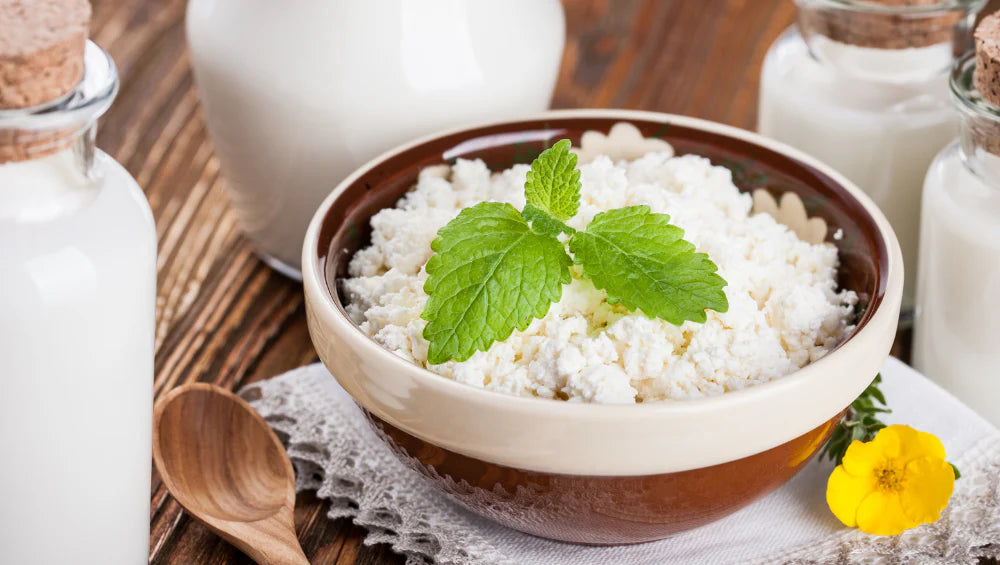
Cottage cheese : C’est quoi ?
Le cottage cheese est un fromage frais obtenu à partir de lait caillé, auquel on retire une grande partie du lactosérum (whey). Contrairement aux fromages affinés, il ne subit pas de maturation prolongée. Il conserve donc une teneur élevée en eau et une texture granuleuse caractéristique.
Il est particulièrement consommé en Amérique du Nord et en Europe du Nord, mais son usage s’est largement diffusé dans les pratiques de nutrition sportive.
Différence avec d’autres produits laitiers
Le cottage cheese est souvent comparé à d’autres produits riches en protéines :
- Fromage blanc : texture plus lisse, goût plus neutre
- Skyr : très riche en protéines, texture plus dense
- Ricotta : plus grasse et plus douce
La principale différence réside dans le processus de fabrication et la proportion caséine/lactosérum.
Valeurs nutritionnelles du cottage cheese
Le cottage cheese est particulièrement intéressant pour sa teneur en protéines, majoritairement sous forme de caséine.
Généralement, 100 g de cottage cheese apportent en moyenne :
- 11 à 13 g de protéines
- 3 à 5 g de glucides
- 4 à 5 g de lipides (variable selon la version)
- 80 à 100 kcal
Cottage cheese bienfaits : Un aliment riche en protéines de haute qualité
Le cottage cheese est particulièrement reconnu pour sa richesse en protéines de haute qualité, apportant l’ensemble des acides aminés essentiels nécessaires à l’organisme.
Ces protéines contribuent au :
- maintien de la masse musculaire et de l'ossature,
- développement de la masse musculaire. notamment dans un contexte de pratique sportive ou d’activité physique régulière.
Elles jouent un rôle central dans les apports journaliers recommandés en protéines, en particulier chez les personnes ayant des besoins accrus, comme les sportifs ou les individus cherchant à optimiser leur composition corporelle.
Sur le plan nutritionnel, cela fait du cottage cheese un aliment intéressant à intégrer dans une alimentation équilibrée, en raison de sa densité en protéines et de sa facilité d’utilisation au quotidien dans différents types de repas.
Cottage cheese et nutrition sportive
Intérêt en période de prise de masse
En période de prise de masse, l’objectif est d’augmenter les apports énergétiques et protéiques.
Le cottage cheese peut être utile car :
- il apporte des protéines de haute qualité
- il peut être facilement combiné à des aliments caloriques (avoine, fruits, oléagineux)
- il contribue à augmenter l’apport en protéine (essentiel pour le développement de la masse musculaire)
Il ne constitue pas une source calorique élevée en soi, mais il s’intègre facilement dans des repas hypercaloriques.
Intérêt en période de sèche
En période de sèche, la priorité est la réduction des calories tout en maintenant la masse musculaire.
Le cottage cheese est intéressant car :
- il est riche en protéines pour un apport calorique contrôlé
- il est généralement faible en sucre et en matière grasse
En période de maintien
En phase de maintien, le cottage cheese peut être utilisé comme :
- collation protéinée
- complément de repas
- source de protéines avant le coucher
Son intérêt principal réside dans sa facilité d’intégration au quotidien.
Recettes avec cottage cheese
Le cottage cheese se prête facilement à des préparations simples, rapides et adaptées à une alimentation riche en protéines. Il peut être intégré aussi bien dans des recettes sucrées que salées, sans nécessiter de techniques culinaires complexes.
Idées sucrées
1. Pancakes protéinés au cottage cheese
Temps de préparation : 10 à 15 minutes
Ingrédients :
- 2 œufs
- 80 à 100 g de cottage cheese
- 40 g de flocons d’avoine ou farine d’avoine
- 1 pincée de levure
- Option : vanille ou cannelle
Instructions :
- Mixer ou mélanger l’ensemble des ingrédients jusqu’à obtenir une pâte homogène.
- Faire chauffer une poêle légèrement huilée.
- Verser de petites portions de pâte et cuire environ 2 à 3 minutes de chaque côté.
- Servir avec des fruits frais ou un filet de miel selon les objectifs nutritionnels.
2. Bowl dessert protéiné
Temps de préparation : 5 minutes
Ingrédients :
- Cottage cheese
- Fruits rouges ou fruits de saison
- Flocons d’avoine ou granola
- Amandes ou noix
Instructions :
- Déposer le cottage cheese dans un bol.
- Ajouter les fruits coupés.
- Compléter avec des flocons d’avoine ou du granola.
- Terminer avec quelques oléagineux pour ajouter du croquant.
3. Smoothie riche en protéines
Temps de préparation : 5 minutes
Ingrédients :
- 100 g de cottage cheese
- 1 banane
- 150 ml de lait ou boisson végétale
- 1 cuillère de cacao non sucré ou fruits rouges
Instructions :
- Placer tous les ingrédients dans un mixeur.
- Mixer jusqu’à obtenir une texture lisse.
- Ajuster la consistance avec un peu de liquide si nécessaire.
Idées salées
1. Toast protéiné
Temps de préparation : 5 à 10 minutes
Ingrédients :
- Pain complet ou seigle
- Cottage cheese
- Tomates ou avocat
- Herbes (basilic, ciboulette, poivre)
Instructions :
- Faire griller légèrement le pain.
- Étaler une couche de cottage cheese.
- Ajouter les légumes coupés.
- Assaisonner selon les goûts.
2. Salade complète
Temps de préparation : 10 minutes
Ingrédients :
- Salade verte
- Cottage cheese
- Concombre, tomates, légumes variés
- Source de glucides (quinoa, riz ou lentilles)
Instructions :
- Préparer la base de légumes.
- Ajouter le cottage cheese en topping.
- Incorporer les glucides choisis.
- Assaisonner avec une vinaigrette simple.
3. Wrap fitness
Temps de préparation : 10 à 15 minutes
Ingrédients :
- Tortilla complète
- Cottage cheese
- Poulet, thon ou alternative végétale
- Légumes croquants (salade, concombre, carotte)
Instructions :
- Étaler le cottage cheese sur la tortilla.
- Ajouter la source de protéines et les légumes.
- Rouler fermement le wrap.
- Couper en deux pour une consommation facile.
Par quoi remplacer le cottage cheese ?
Alternatives possibles
- skyr
- fromage blanc
- yaourt grec
- ricotta légère
Le choix dépend principalement de la texture souhaitée et de l’objectif nutritionnel.
Limites et précautions
Même si le cottage cheese est un aliment intéressant, il ne constitue pas un produit miracle.
Points à considérer
- teneur en sodium variable selon les marques
- digestion parfois sensible chez certaines personnes
- importance de la diversité alimentaire
Cottage cheese, bienfaits, protéines et rôle en nutrition sportive : En résumé
Le cottage cheese s’impose comme un aliment simple mais particulièrement intéressant dans une alimentation orientée nutrition sportive. Grâce à sa richesse en protéines de haute qualité, il contribue efficacement à compléter les apports journaliers nécessaires au maintien et au développement de la masse musculaire, notamment dans un contexte d’activité physique régulière.
Son intérêt ne se limite pas à son profil nutritionnel. Sa polyvalence en cuisine permet de l’intégrer facilement dans des recettes variées, aussi bien sucrées que salées, ce qui facilite son utilisation au quotidien sans complexité particulière.
Que ce soit dans une démarche de prise de masse, de contrôle du poids ou de maintien, le cottage cheese peut s’adapter à différents objectifs alimentaires, en fonction de la manière dont il est intégré dans l’alimentation globale.