Qu’est-ce que la farine de patate douce ?
La patate douce elle-même est un tubercule originaire d’Amérique centrale et d’Amérique du Sud. Cultivée depuis plusieurs milliers d’années, elle s’est progressivement répandue dans de nombreuses régions du monde, notamment en Asie, en Afrique et aux États-Unis. Aujourd’hui, elle fait partie des aliments particulièrement appréciés dans l’alimentation sportive grâce à sa teneur intéressante en glucides complexes.
La farine de patate douce est une poudre fine obtenue à partir de patates douces soigneusement séchées puis broyées. Légèrement sucrée, elle se distingue par sa texture souple et sa couleur qui peut varier du beige clair à l’orange plus soutenu selon la variété utilisée.
Encore peu connue il y a quelques années, elle est aujourd’hui de plus en plus utilisée dans les recettes healthy, la nutrition sportive et les préparations sans farine de blé. Son succès s’explique notamment par sa richesse nutritionnelle et sa grande polyvalence en cuisine.
C’est justement sa composition qui explique pourquoi la farine de patate douce attire autant les sportifs et les personnes recherchant une alternative plus nutritive aux farines traditionnelles.
Il existe plusieurs types de farine de patate douce.
- Low glycemic index
- Perfect alternative to wheat flour
- Ideal for your preparations
La farine de patate douce orange
La version orange est la plus connue. Sa couleur provient de sa richesse naturelle en bêta-carotène, un pigment également présent dans la carotte. Elle possède généralement une saveur plus douce et légèrement sucrée, ce qui la rend particulièrement appréciée dans les pancakes, les gâteaux healthy ou les recettes fitness.
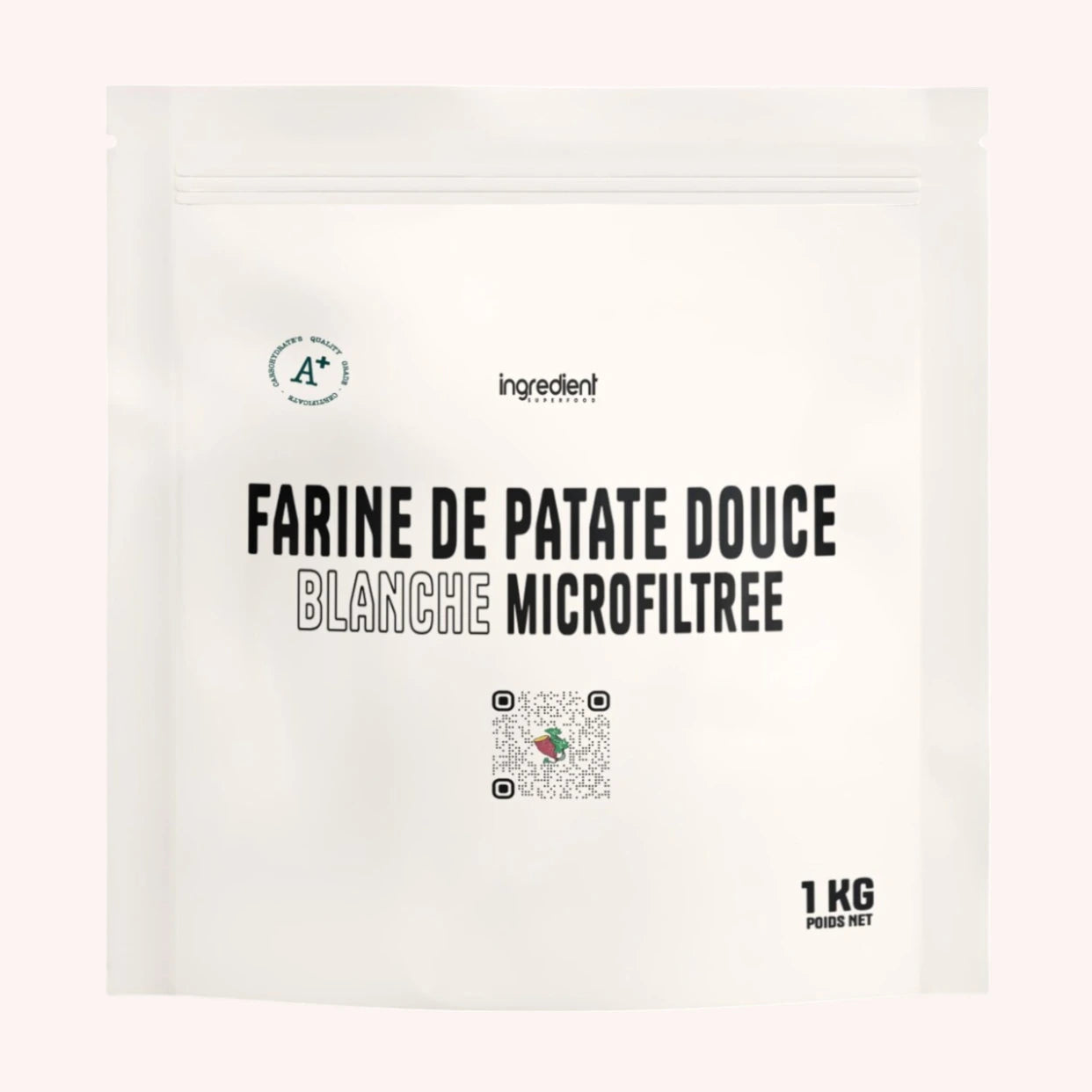
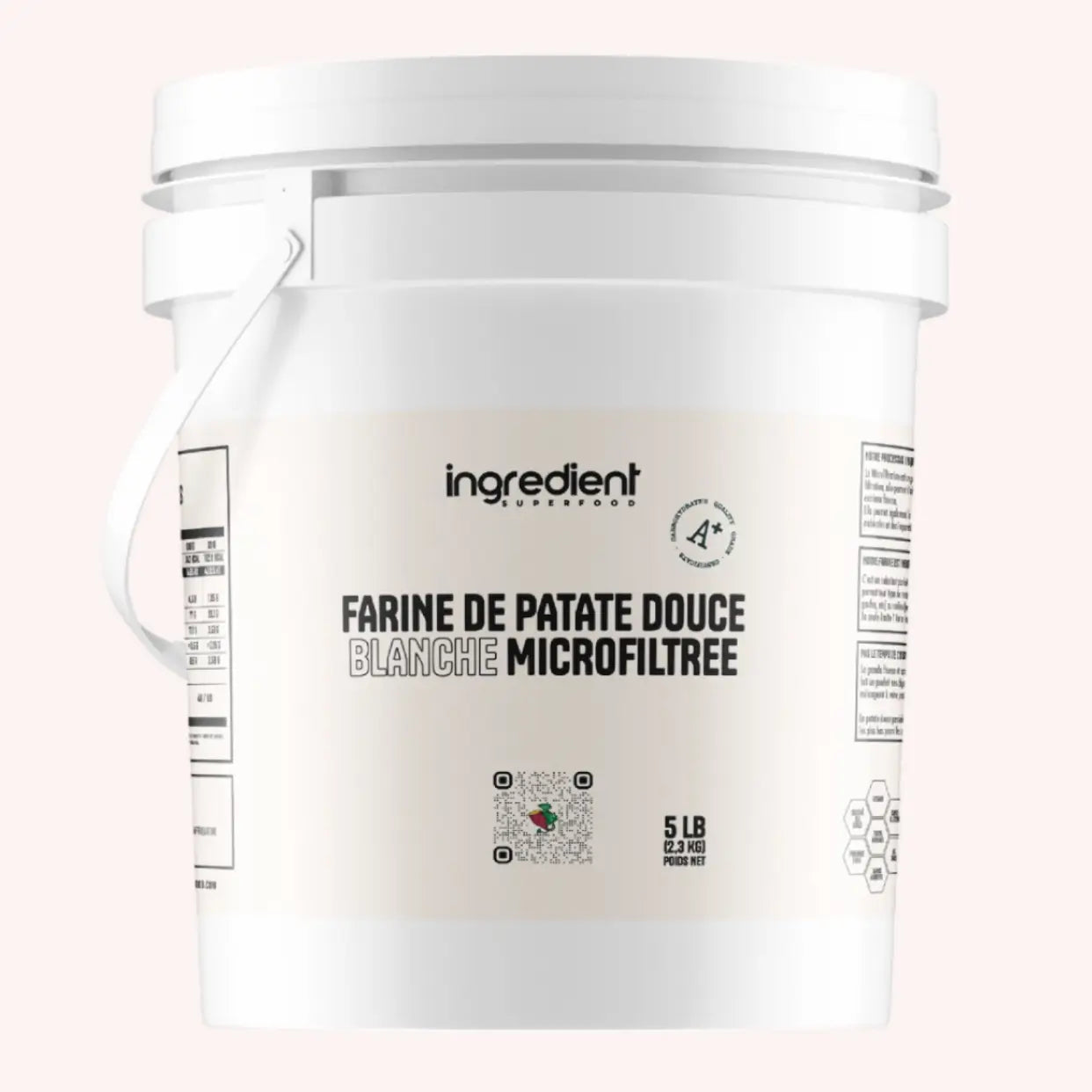
La farine de patate douce blanche
La farine de patate douce blanche présente une couleur plus claire et un goût souvent plus neutre. Sa texture est parfois un peu plus légère, ce qui peut convenir à certaines préparations culinaires où l’on souhaite un résultat moins sucré.
Composition nutritionnelle : Que contient réellement la farine de patate douce ?
La farine de patate douce possède un profil nutritionnel particulièrement intéressant grâce à sa composition naturellement riche et variée. Obtenue à partir de patates douces déshydratées puis broyées, elle concentre une partie des nutriments présents dans le tubercule d’origine.
Sa composition peut légèrement varier selon :
- la variété utilisée,
- le mode de transformation,
- la couleur de la patate douce,
- la présence ou non d’ingrédients ajoutés.
De manière générale, la farine de patate douce contient principalement des glucides complexes, ce qui en fait une farine naturellement riche en amidon. Elle contient également des fibres alimentaires, présentes en quantité variable selon le niveau de raffinage du produit.
On retrouve aussi plusieurs vitamines et minéraux naturellement présents dans la patate douce, notamment :
- la vitamine A sous forme de bêta-carotène dans les variétés orange ;
- la vitamine C,
- certaines vitamines du groupe B,
- du potassium,
- du manganèse,
- du cuivre.
Certaines versions commercialisées sous forme de poudre instantanée peuvent également présenter des différences nutritionnelles liées au procédé de fabrication ou à l’ajout d’autres ingrédients. C’est pourquoi il reste utile de vérifier la liste des ingrédients et les valeurs nutritionnelles avant achat.
Pourquoi la farine de patate douce intéresse autant les sportifs ?
Dans l’univers du fitness et de la musculation, les glucides occupent une place centrale. Ils contribuent :
- Au maintien des fonctions cérébrales normales.
- A la récupération d'une fonction musculaire normale (contraction) après un effort physique très intense et/ou prolongé occasionnant une fatigue musculaire et une diminution des réserves de glycogène dans les muscles squelettiques.
La farine de patate douce est souvent utilisée :
-
avant un entraînement;
-
après une séance de musculation ;
- dans des recettes de récupération,
- lors des phases de prise de masse contrôlée.
Son avantage principal réside dans sa polyvalence. Elle peut être utilisée dans des préparations solides ou liquides sans nécessiter des recettes compliquées.
Autre point apprécié : son goût naturellement doux permet de limiter certains sucres ajoutés dans les recettes fitness.
La farine de patate douce reste avant tout une source de glucides parmi d’autres. Son intérêt dépend surtout du contexte alimentaire global, du niveau d’activité physique et des besoins individuels.
La farine de patate douce contient-elle des protéines ?
C’est une question fréquente, notamment chez les pratiquants de musculation.
La réponse est simple : oui, mais en quantité modérée.
La patate douce protéine n’est pas une source majeure de protéines. La farine de patate douce contient généralement peu de protéines comparée à l’avoine, aux légumineuses ou aux poudres protéinées.
En pratique, elle fonctionne mieux en complément d’autres aliments riches en protéines comme :
- les œufs,
- le fromage blanc,
- la whey,
- les yaourts riches en protéines,
- certaines farines végétales.
Une alternative à la farine de blé ?
La farine de patate douce est souvent présentée comme une alternative à la farine de blé.
Elle peut être intéressante pour :
- diversifier son alimentation,
- apporter une saveur différente,
- réduire certaines farines raffinées,
- réaliser des recettes sans blé.
La farine de patate douce ne réagit pas exactement comme la farine de blé en cuisine. Elle absorbe davantage l’humidité et peut modifier la texture des préparations.
Dans certaines recettes, remplacer totalement la farine de blé fonctionne très bien. Dans d’autres, un mélange avec de l’avoine ou une autre farine donne un meilleur résultat.
Différence entre farine de patate douce et farine d’avoine
La farine de patate douce et farine d’avoine sont souvent comparés dans l’alimentation sportive.
Pourtant, leurs usages et leurs profils nutritionnels ne sont pas identiques.
La farine d’avoine
- contient généralement plus de protéines,
- apporte davantage de fibres solubles,
- possède une texture plus dense.
La farine de patate douce
- offre un goût naturellement plus doux,
- est souvent plus légère en texture,
- apporte des glucides facilement utilisables,
- fonctionne très bien dans les recettes pré-entraînement.
En réalité, il ne s’agit pas forcément de choisir l’une contre l’autre. Beaucoup de sportifs utilisent les deux selon leurs objectifs et leurs recettes.
Comment utiliser la farine de patate douce ?
Recettes populaires avec la farine de patate douce
- pancakes fitness,
- gaufres protéinées,
- crêpes healthy,
- banana bread,
- muffins sportifs,
- cookies maison,
- mug cakes,
- porridges enrichis,
- smoothies épais.
Son goût légèrement sucré fonctionne particulièrement bien avec :
Conseils pratiques de cuisson
La farine de patate douce absorbe davantage les liquides que certaines farines classiques. Il est donc souvent utile :
- d’ajouter un peu plus de lait ou d’eau,
- de mélanger avec une autre farine,
- de tester progressivement les dosages.
Une erreur fréquente consiste à vouloir remplacer la farine de blé gramme pour gramme sans ajuster l’hydratation.
Le résultat peut alors devenir sec ou compact.
Comment choisir une bonne farine de patate douce ?
Tous les produits ne se valent pas.
Pour choisir une farine de qualité, plusieurs critères peuvent être utiles :
- une liste d’ingrédients courte,
- l’absence de sucres ajoutés,
- un procédé de transformation limité,
- une origine clairement indiquée,
- des informations nutritionnelles transparentes.
-
100 % de farine de patate douce.
Les versions biologiques peuvent également intéresser certaines personnes, même si le plus important reste surtout la qualité globale du produit.
Il peut aussi être utile de vérifier si le produit est réellement une farine ou une préparation instantanée enrichie.
La farine de patate douce est-elle adaptée à tout le monde ?
La farine de patate douce peut facilement trouver sa place dans une alimentation variée et équilibrée. Grâce à sa polyvalence et à son profil nutritionnel, elle est aujourd’hui utilisée aussi bien par les personnes actives que par les sportifs ou les personnes cherchant à diversifier leurs sources de glucides au quotidien.
Elle est particulièrement appréciée dans l’univers du fitness et de la musculation, notamment dans les recettes pré-entraînement, les collations sportives ou les préparations healthy maison. Sa texture et son goût légèrement sucré permettent également de réaliser des recettes gourmandes sans forcément utiliser de grandes quantités de sucres ajoutés.
La farine de patate douce peut aussi convenir aux personnes suivant un mode de vie équilibré ou un programme alimentaire plus structuré. Certaines personnes l’intègrent par exemple dans :
- une alimentation sportive ;
- un rééquilibrage alimentaire ;
- des recettes maison plus simples ;
- des programmes nutritionnels contrôlés ;
- des menus avec une meilleure maîtrise des ingrédients utilisés.
Son utilisation reste également intéressante pour les personnes qui souhaitent varier les farines traditionnelles et découvrir de nouvelles alternatives en cuisine.
Comme pour n’importe quel aliment, l’essentiel reste de l’intégrer dans une alimentation cohérente et adaptée à ses besoins personnels.
Farine de patate douce, bienfaits, utilisation et intérêt en nutrition sportive : En résumé
La farine de patate douce s’impose progressivement comme une alternative intéressante dans l’univers de la nutrition sportive et des recettes healthy. Appréciée pour sa richesse en glucides complexes, sa polyvalence en cuisine et sa texture, elle trouve facilement sa place dans de nombreuses préparations du quotidien.
Que ce soit dans des pancakes protéinés, des collations sportives, des gâteaux maison ou des recettes sans farine de blé, elle permet de varier les sources de glucides tout en apportant une texture agréable et un goût légèrement sucré.
Disponible en version farine de patate douce orange ou blanche, cette farine séduit également par sa composition naturellement riche en fibres et contenant également des fibres, vitamines et minéraux. Son utilisation attire aujourd’hui aussi bien les sportifs que les personnes actives ou celles recherchant une alimentation plus équilibrée et diversifiée.
Même si elle ne remplace pas tous les autres types de farine, elle représente une option intéressante pour diversifier son alimentation et découvrir de nouvelles alternatives culinaires dans le cadre d’un mode de vie actif et équilibré.